
Exodus 3:1-15 and Psalm 105:1-6, 23-26, 45b | Jeremiah 15:15-21 and Psalm 26:1-8 | Romans 12:9-21 | Matthew 16:21-28
The prescribed Old Testament reading clips off a few verses of significance from the Exodus narrative. Just before the dramatic burning bush scene, at the end of chapter two, we get a glimpse into the dynamic between God and God’s people, an exchange the form of which has become familiar and useful to all who call upon the Lord God for deliverance, safety, and salvation. Israel, who find themselves oppressed and displaced, cry out, not aimlessly, not as those without hope, but cry upward, to the One who is in the “sweet spot” of faith, beyond their sight but within their imagination. A cry for help is, perhaps, unremarkable on its own. This alone would not “set Israel apart” as they are so keen on being. However, it is the response of God, and the fact that there is a response at all, that catches our attention. In the same way that Israel cries out in a particular direction, so too does God respond in particularity and with intent. Generations of faithful people have taken comfort in the divine verbs listed in verses 24 and 25: “God heard their groaning and he remembered his covenant with Abraham, with Isaac, and with Jacob. So God looked on the Israelites and was concernedabout them. Somewhat ironically, it is the everyday human actions of God in these verses that have been a fountain of hope for so many. A God that hears, remembers, looks, and shows concern is a trustworthy God indeed.
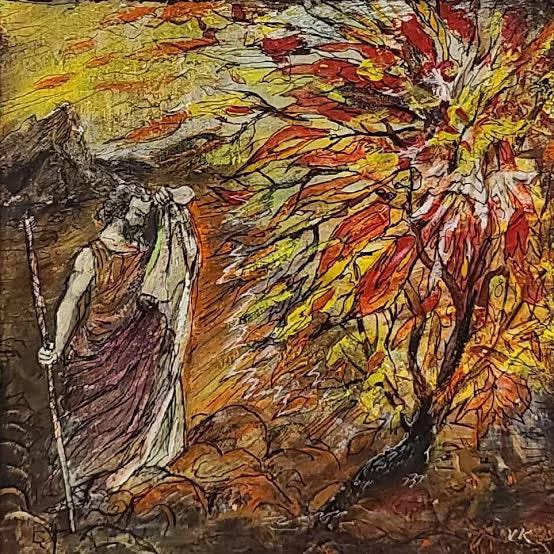
Of course, this is all preliminary to the Old Testament reading this week, a familiar story, but one that, read in the light of the few preceding verses, reveals a great deal about God’s care for God’s people. Calling to Moses from the burning bush, God recounts each of the actions from before, reminding Moses of the covenantal relationship, then stating clearly that he has “observed the misery of my people who are in Egypt” and “heard their cry on account of their taskmasters.” But here, in this encounter with Moses, God takes it a few steps further, establishing what is to come next. The verbs associated with God from before were primarily receptive, but here, God is making a promise of how God will act. Leaning heavily on this “indeed,” God goes on to tell Moses that God knows the suffering of Israel. This is a God of empathy, a God who feels as the people feel. God does not just engage with Israel’s suffering on an intellectual or superficial level. By appending this verb “know” to what God has already seen and heard, God is establishing, now, at this sort of creation story of the people of God, that what God’s people feel indeed has an impact on God. That God and God’s people are, in Fretheim’s words, in a “relationship of reciprocity.” The kind of God this God is, the kind of God Moses will be telling the people about, will be the kind of God who can and will know, fundamentally, what it is to be with and in and among the people.
The fullest extension of that “knowing” comes in the next verb attributed to God in this narrative. Having known the suffering of the people, God then has “come down to deliver them from the Egyptians and to bring them up out of that land to a good and spacious land.” The kind of love that begins with true knowing must extend to action. Divine love is love that starts with a cry that goes up, a God who comes down, and a promise to return once again, like the rain and snow in Isaiah’s invitation in chapter 55. This is the pattern God is establishing with the people from the beginning. It will be the pattern carried out throughout all of Israel’s history, and we are not surprised to find our Gospel text in the same pattern.
Here, Jesus, God’s love incarnate, is preparing to “know” the suffering of human brutality and the weight of sin. Peter’s attempt to put a stop to this suffering, however noble it may seem, is, in fact, a hindrance to the primary way in which God has established relationship with the people. While this may seem at first to be “just a part of the plan,” taking the whole of these stories together shows that Jesus’ rebuke of Peter is a rebuke of anything less than divine, perfect love. Much like Moses was invited to speak to Pharaoh on behalf of God’s act of love, so too are the disciples, and us in turn, are invited to pick up our crosses and follow in the same act of love, a love that is attuned to the cries of those in distress, acts in that direction, and looks back above in hope.
The seventh prayer of the Easter Vigil mass has been a helpful prayer for me lately:
O God of unchanging power and eternal light,
look with favor on the wondrous mystery of the whole Church
and serenely accomplish the work of human salvation,
which you planned from all eternity;
may the whole world know and see
that what was cast down is raised up,
what had become old is made new,
and all things are restored to integrity through Christ,
just as by him they came into being.
Who lives and reigns for ever and ever.