
“The book of Acts takes place in empire – the Roman Empire – and this is not a fact that we should ever let escape our attention. The goal of the Roman Empire was to shape the world in its own image. This is always the desire of empires”[1]
In the empire, “The prevailing fantasy of people is to have power over others, to claim the power of self-determination, and to make a world bow to its will. This is the fantasy of nations and clans, peoples and corporations. But the Spirit offers us God’s own fantasy of desire for people, of joining and life together and of shared stories bound to a new destiny in God. This desire for people is not a desire for their utility but for their glory, to draw them into the divine pleasure and joy at the sight of the creature in communion and formed in hope. The disciples are to make evident divine desire, reveal it to be the central gift of the Spirit.”[2]
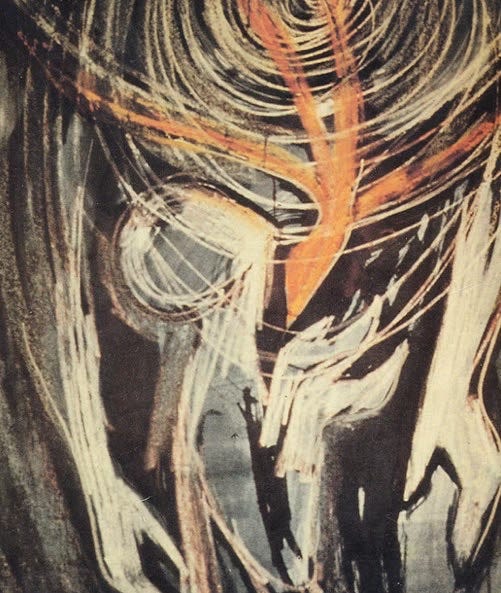
Pentecost is a striking confrontation of God’s power with the power of empire. Empires maintain control through assimilation, reduce people and places down to their utility, and draw borders between who is worthy and who is not. But Pentecost turned the Roman empire upside down – not by the sword but by witness, presence, fellowship, and care. Jesus promised that the disciples would “receive power when the Holy Spirit comes on you” (Acts 1:8), and just a few days later, a rushing wind blew into the house where the disciples were sitting and was poured out on all of them, equipping them to do things they had never before done – speaking languages they had not known, preaching eloquent sermons with no formal training, doing signs and wonders of healing and grace across towns and villages, being joined to all kinds of people they never thought could be family. Instead of enforcing borders and assimilation, the Spirit powerfully united people of all nations to one another and to God, setting them free from idolatry and division to be people of love and trust. At Pentecost, God’s desire for communion revolutionized the way people related to one another, redefined who is worthy, and crushed the dividing wall between nations and peoples – powerfully transforming the world from the empire’s image into a New Creation in God’s image.
But how does this revolutionary power of the Spirit differ from the power of the empire? What does it look like for the church today to continue in the Spirit’s transformative work?
1) The Spirit is not a power taken, but power given. In the empire, power can only be taken at another’s expense. There is only one president, and one can attain such power only by earning it, paying for it, by physical violence, or by vilifying others so that you can be first. All these methods of self-securing multiply distrust in the community and break down connection.
But the power of the Spirit is different. At Pentecost the Spirit – that is, the gift of God’s very presence dwelling between and within us – came down on all who were gathered and drew them together. No one earned this power, for the Spirit is a gift of God’s gracious love for all people – for young and old, for slave and free, for Partheans, Medes, Elamites, Arabs… all whom the Lord our God calls. This power is not diminished, but strengthened as it is shared. Just as when the flame of one candle lights another, the gift of the Spirit is not lessened when received by others. And if power is given, then there is no need to take power. Violence, personal wealth, and striving are made useless. We are set free from the idolatries of empire, freed to open ourselves up to receive God’s presence and one another with joy and grace.
2) On Pentecost, the Spirit’s power doesn’t come down on just one person but on a community. Unlike the empire that prizes self-determination, the Spirit empowers us to be dependent. No one in the church can do all the Spiritual works of healing, speaking in tongues, working miracles, and prophesying. Instead, as Paul says, we are each given particular gifts for the building up of the body.
For those of us who have lived long in the empire, this can be hard to get used to. How often have I heard a church member say, “Wow! Look what God is doing in that person. Look at their ministry and power! Look at their courage to proclaim Christ, or to serve others, or to listen and advise those in need of help — I could never do that.” But isn’t that exactly how God intended it to be? We aren’t meant to have all the gifts! Why try to live someone else’s calling when we have been given our own? “There are a variety of gifts, but the same Spirit… To each is given the manifestation of the Spirit for the common good” (1 Cor 12:4, 7). The differences in our gifting need not lead to division, but actually set us up for giving and receiving care, wisdom, and love from one another. Our need for others is not a weakness, but a strength. We need not bear the terrible weight of self-sufficiency any longer, for our needs bind us to God and to one another in communion and joy.
By giving and receiving from one another, by honoring our unique gifts for the building up of the body, the church images our Triune God to the world. Listen to what Paul writes:
Now there are varieties of gifts, but the same Spirit; 5
and there are varieties of services, but the same Lord; 6
and there are varieties of activities, but it is the same God who activates all of them in everyone.
(1 Cor 12:4-6)
Our Triune God is not a singular entity, God is a relationship of love all the way down. As members of one body – both unified and distinct – our life together reflects the God we worship who is 1 God in 3 persons, unified and yet distinct. This is an alternative witness to the assimilating power of the empire. When we gather together – young and old; wealthy and getting by month to month; Kenyan, Mexican, and American – Joel’s prophecy is fulfilled and we powerfully give witness to the manifold wisdom of God to the rulers and authorities (Eph 3:10).
3. The power of the Spirit is not just given for the sake of the existing people of God, but given so that all who call on the name of the Lord shall be saved. Jesus tells his followers that the coming Spirit will empower them to be “my witnesses in Jerusalem… and to the ends of the earth” (Acts 1:8). While the empire constantly seeks to serve its own ends, its own security, its own wealth, the people of God are drawn out in love by the Spirit to a far country of strangers and foreigners to seek their good, theirliberation, that we might be joined to others in love for the glory of God.
But the Spirit rarely sends us where we would expect. Jennings writes, “The deepest reality of life in the Spirit depicted in the book of Acts is that the disciples of Jesus rarely, if ever, go where they want to go or to whom they would want to go. Indeed the Spirit seems to always be pressing the disciples to go to those to whom they would in fact strongly prefer never to share space, or a meal, and definitely not life together. Yet it is precisely this prodding to be boundary-crossing and border-transgressing that marks the presence of the Spirit of God.”[3] The power of the Spirit is not a power we can wield for our own ends or to control the lives of others. As Jesus tells Nicodemus, “The wind blows wherever it pleases. You hear its sound, but you cannot tell where it comes from or where it is going. So it is with everyone born of the Spirit.” (Jn 3:8) The Spirit is ever deepening our imagination of who God may be calling, erasing the lines between people we have drawn in our own minds so that more can be gathered in. In our polarized culture, even considering the idea that God could be calling your enemy to become family with you in Christ is a radical act of discipleship.
One such shocking place the Spirit blows many of us is right back into the heart of the empire. Having been emptied of the empire’s idolatry and death-dealing ways and filled with God’s life of love, God sends us back to the empire in the strength of the Spirit to witness to an alternative way of life of peace that leads to the healing of the nations. God’s dream is not the destruction of cultures but the reconciliation of all things: things in heaven and on earth, both the powers and the peoples, Jews or Greeks, slaves or free. We live as resident aliens, ambassadors of New Creation, citizens of the city of peace.
Church, the Holy Spirit still blows today! God is still descending on the church around the world in tongues of flaming fire and offering us the gift of God’s very self to us in love: equipping gathered disciples to receive power to witness to Christ, to be joined to people they never thought could be family, equipping them to speak languages they had not known, preaching sermons with no training, doing signs and wonders of healing and grace across every town and village. The revolution that began at Pentecost lives today – can you see it? The Spirit is turning the world upside down through the church – setting us free from idolatry and division to be people of love and trust. Glimpses of God’s New Creation can be seen as strangers are welcomed in, as the hungry are fed good things, as people repent from ways of domination and take up the ways of peace. This revolution is happening all across the globe, right now, and it is happening here in your neighborhood. God has come and is coming for us. The end of all things is communion. All things are being made new. Come Holy Spirit!
[1] Jennings, Willie James. Acts: A Theological Commentary on the Bible. Presbyterian Publishing, 2017. 4-5.
[2] Ibid. 11
[3] Ibid.